Key Executive Board · Northwest Arkansas
Develop the leader who can take your whole business strategically forward — you, or your second-in-command.
A structured 24-month peer advisory board that builds full business acumen and leadership maturity — in you, the owner who wants to master running all of it yourself, or in the second-in-command you're grooming to run it for you. So the business runs, grows, and holds its value without everything routing through one person.
For business owners in Northwest Arkansas · Led by a certified TAB facilitator
The gap most owners feel
Your business runs because of you. That's the problem.
The biggest decisions still route back to you. Growth is capped by your capacity, stepping away feels risky, and the value you've built stays tied to one person — you.
That only changes when you build leadership strong enough to run the whole business at a strategic level. Usually that's a capable second-in-command — strong in their lane, but never taught to run all of it. Sometimes it's you — strong at what you built, but never taught the rest of what running it takes. Either way, it isn't another management course. It's building business acumen and leadership maturity together, over time, with real accountability — exactly what the Key Executive Board is built to do.
Why owners do this
Whatever brought you here, it starts the same way.
Owners come to KEB for different reasons — but they all run through the same move: building leadership strong enough that the business no longer bottlenecks on you. Usually that's developing your right hand; sometimes it's building it in yourself.
Sell for more, someday
A business that runs without you is worth more — and sells better — when you're ready to step back.
Take a real vacation
Unplug and actually disconnect, knowing your team can keep things running without you.
Grow past your ceiling
You can't grow beyond what one person can personally decide. Build the leader who expands your capacity.
Stop being the only decider
Reduce the risk of a business where every important call still has to route back to you.
Who it's for
Built for the leader you're counting on next.
KEB is for two kinds of leaders doing the same deliberate work — often side by side in the same room.
The owner grooming a successor
You want to reduce how much depends on you, build a leadership bench, and move toward the day the business can run — and grow — without you in every decision.
The second-in-command
A 2iC, C-suite leader, or manager on the ownership track who's ready to learn what it actually means to run and operate the whole business at a strategic level.
The owner mastering it deliberately
An owner who wants more than counsel on the side — the structured, ground-up build that turns hard-won instinct into a system, with a clear runway into a peer board when the foundation is set.
The outcome
A leader who thinks and operates like an owner.
Business acumen paired with leadership maturity — so decisions get made at the right level, the owner's intent carries through the whole company, and you're building the person who can carry it forward.
How it works
A structured two-year development journey.
A monthly peer board
4–8 senior leaders from non-competing companies, meeting for a four-hour board meeting each month.
24-month arc
A revolving rotation of strategic building blocks, with homework applied in the TAB Blueprint™.
DISC + Driving Forces
A TTI Talent Insights assessment sharpens each leader's self-awareness, plus certified facilitation and commitments between meetings.
Inside each meeting
Every board meeting follows a proven rhythm.
Life · Health · Business check-in
Each member scores where they are — building the trust and psychological safety that make peer advice land.
Peer-advisory topics
Members bring real challenges to the board and get diverse, experienced counsel — the wisdom of a room, not one consultant.
Education & homework review
Last month's homework is reviewed, then the new strategic topic is taught and applied to each member's business.
Positive of the day
A deliberate close on momentum and wins.
Best takeaway
Each member commits to what they'll act on before the next meeting.
What they learn
The operator and the leader, built together — session by session.
The operating skill and the leadership maturity build in parallel across all 24 months — a piece of each in the same stretch, so they reinforce each other as they land.
The full strategic view of running a business:
- Business diagnostic, vision, values & culture
- SWOT and the strategic mindset (working ON the business)
- Cashflow, budgeting, forecasting & KPIs
- Accountability chart, Critical Success Factors & the Strategic Action Plan
The interpersonal maturity to lead:
- Communication, emotional intelligence & empathy
- Conflict resolution and negotiation
- Leadership styles, prioritization & time management
- Operational management, project management & process improvement
Two development paths
Choosing the right path for each leader.
TAB offers two leadership programs. The Key Executive Board is the deeper, longer path for a successor — or an owner building at a strategic level; HI-MAP is a shorter training track focused on leadership and management skills, for managers and emerging leaders. Here's the short version — on a call we'll map the right one for each of your people.
| Key Executive BoardDeep leadership development | HI-MAPLeadership & management skills | |
|---|---|---|
| Best for | A successor being groomed to run the whole business — or an owner mastering it deliberately. | Managers & emerging leaders sharpening specific skills. |
| Emphasis | Business acumen, with leadership maturity. | Leadership & people skills. |
| Format | Monthly peer advisory board of non-competing senior leaders, over 24 months. | Focused skills-training sessions — 4 Paths, 16 sessions. In-house or mixed cohort. |
| Commitment | Longer, sequential, higher investment. | Shorter, modular, lower price point. |
Not always either/or. For a strong successor, the two work well in sequence — HI-MAP builds core skills now, the Key Executive Board deepens strategic ownership over time.
Free for owners
Not ready for a call? Start with the map.
The Strategic Leader's Handbook is the full 24-month blueprint we work from — every topic the leader grows through, and what each one gives back to you as the owner. It's yours, free. Read it, and you'll know exactly what developing your second-in-command — or going deeper yourself — looks like long before we ever talk.
We'll email it straight to you — just the handbook, nothing else.
The complete 24-month blueprint for developing the leader your business will run on — your second-in-command, or you.
Questions
What owners ask before joining.
Who is the Key Executive Board for? +
Two kinds of leaders: the second-in-command, C-suite leader, or manager being groomed to run the whole business — and the owner who wants to master it deliberately, with structure and accountability rather than counsel alone.
What exactly is a Key Executive Board? +
A Key Executive Board is a facilitated peer advisory board for the person being developed to run a business — a second-in-command or rising executive. Over a 24-month rotation, a small group of non-competing leaders works through the full picture of running a company — strategy, finance, planning, leadership, and operations — with monthly accountability and a certified facilitator. It's succession development done alongside peers, not in isolation.
I'm the owner, not a successor — is KEB right for me? +
Yes — and you'd be in good company in the room. A peer board gives an established owner ongoing counsel; KEB goes deeper — a structured two-year build of your operating and leadership foundation, for owners who want more than coaching on the side. It's a choice of depth, not a step below, and many owners use it as the runway into a peer board once the foundation is set. Our boards are a mix of owners and rising leaders, all doing the same deliberate work.
What is a peer advisory board? +
A peer advisory board is a small group of business leaders from non-competing companies who meet regularly, with a trained facilitator, to work on each other's real challenges and hold one another accountable. You get the honest outside perspective of people who've faced the same decisions — without the isolation of making every call alone. The Key Executive Board applies that format to a focused two-year development track.
What's the time commitment? +
One four-hour board meeting per month over a 24-month rotation, plus homework applied in the TAB Blueprint™ between meetings.
Who's in the room? +
4–8 senior leaders from non-competing companies across different industries — so your leader learns beside real peers, with confidential discussion.
How is this different from HI-MAP (our skills-training program)? +
HI-MAP is shorter, modular skills-training focused on leadership and people skills — ideal for managers and emerging leaders. The Key Executive Board is a longer, comprehensive program focused on business acumen, for a true successor. They can also be done in sequence.
What does the owner see? +
A monthly progress summary — topics covered and commitments made. The peer discussions themselves stay confidential, which is what makes them honest. Want the fullest picture of what your leader works through? Grab the free Strategic Leader's Handbook — it maps all 24 months, and it's the best way to see exactly what the program develops.
What does it cost? +
It depends on a few real things — the size and complexity of your business, what you want your successor equipped to do, and whether you add private one-on-one coaching alongside the board. It's an employer-sponsored investment in a key person, scoped to your situation rather than one-size-fits-all.
How is this different from executive coaching, an MBA, or hiring an outside executive? +
An MBA teaches theory in a classroom; executive coaching is one voice, one-on-one; hiring an outside executive skips developing the person you already trust. The Key Executive Board develops your existing successor on your actual business, with a room of peers who've faced the same calls and a facilitator holding them accountable month over month. It's applied, relational, and built around your company — not a credential or a rescue hire.
How is this different from a mastermind or networking group? +
Masterminds and networking groups are usually informal and open-ended — valuable for connections, but with no curriculum, no facilitator, and no accountability for following through. The Key Executive Board is a facilitated program with a defined 24-month path through the full picture of running a business, confidential non-competing peers, and monthly accountability tied to your own plan. You leave each meeting with commitments, not just contacts.
What does the 24-month journey actually cover? +
The board moves through five areas of business mastery: strategy (diagnostic, vision, values, SWOT), finance (cash, forecasting, KPIs, org design), the annual planning cycle including exit strategy, executive leadership (communication, EQ, conflict, negotiation, influence), and operational excellence (systems, projects, process improvement). It's grounded in DISC and Driving Forces at the start, so development is built on real self-awareness. The full month-by-month map is in the free Strategic Leader's Handbook.
What is the business diagnostic? +
The diagnostic is a structured assessment we run at the start — a clear-eyed look at where the business stands across strategy, finance, operations, and leadership, and where the gaps and opportunities are. It becomes the baseline the two years build on, so development targets what actually matters for this business rather than a generic checklist, and progress is measured against a real starting point.
What is DISC, and how is it used? +
DISC is a well-established behavioral assessment that maps how a person naturally communicates, makes decisions, and handles pressure. At the start of the program each participant completes DISC, alongside Driving Forces, which surfaces what motivates them — so development is grounded in real self-awareness: how to lead, delegate, and negotiate in a way that fits how they're actually wired. It's a foundation for the leadership work, not a label.
What will my successor be able to do by the end? +
Be equipped to run and operate the business at a strategic level. By the end they'll have put four things on the table: a five-year accountability chart showing who fills the role they'll vacate, a monthly KPI pulse report, a company-level strategic action plan tied to the year's priorities, and a shared understanding of your exit timeline. How far a leader takes it is always up to them — but they'll finish prepared to lead without routing every decision through you.
What if I don't have an obvious successor yet — or I'm not sure the person I have is right? +
That's one of the most useful conversations to have on a fit call. Sometimes the right successor is already on your team and simply hasn't been developed; sometimes it's about clarifying what 'ready' would even look like. Come with one name in mind — the leader you'd most want to grow this year — and we'll talk honestly about fit before anyone commits.
What's my role as the owner during the two years? +
Lighter than you'd expect — and lighter as it goes, which is the whole point. The board carries the facilitation, accountability, and peer learning, so you're never teaching the curriculum. You'll get a monthly summary that keeps you aware of what your successor is working on and where they're ready to take on more. Here's the honest part: a successor gets out of this as much as their owner actively supports them — the more room you give them to apply what they're learning, and the more you hand over as they earn it, the bigger the return for both of you. Less a task on your plate than an opportunity to let go on purpose.
What if structure, patience, and follow-through aren't a natural strength — for my successor, or for me? +
Then this is built for you. Many of the best business owners are strong on vision and drive but find the structured, follow-through side draining — and a good number are neurodivergent, or simply do their sharpest work against a deadline. The board supplies the structure you don't have to manufacture yourself: a monthly rhythm, real accountability, and homework that turns 'important someday' into 'due this month.' It's not about changing how someone's wired — it's giving real strengths a framework to show up on schedule.
Are the board meetings in person or virtual, and where? +
Boards meet locally in Northwest Arkansas, led by a certified TAB facilitator. We'll cover the current schedule and format on your fit call.
Can we pay monthly, and is there a contract? +
Yes — the investment can be paid monthly rather than in one lump sum, which keeps it cash-flow-friendly and easy to budget. There's no long-term contract and no lock-in; the program continues because it's working, not because paperwork says so. We'll cover the specifics on your fit call.
Can my successor add private coaching alongside the board? +
Yes. Some successors want one-on-one coaching on top of the monthly board — to go deeper on a specific challenge or move faster on a particular skill. That's available as an optional add-on. If it's a fit for your leader, we'll talk through what it looks like.
What happens on the fit call? +
A short, no-pressure conversation to see if the board is right for you and the leader you want to develop. No pitch. You'll leave with a straight answer on fit — and if it's not the right moment, we'll tell you.
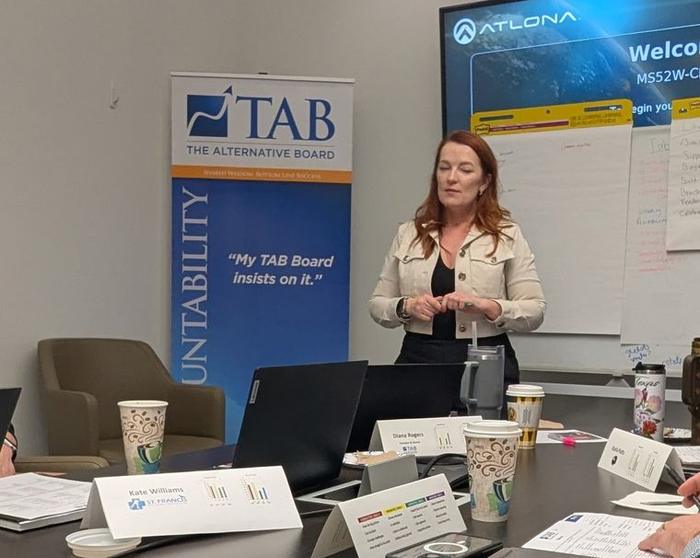
Your facilitator
Led by Diana Rogers
Every Key Executive Board here is led by Diana Rogers — founder of The Alternative Board Northwest Arkansas and a certified TAB facilitator. She personally guides each board through all 24 months, grounded in DISC and real business experience, with a genuine read of the people in the room.
When you book a fit call, you’re talking to the person who will be in your successor’s corner the whole way.
Book your KEB fit call.
A short, no-pressure conversation to see if the Key Executive Board is the right fit — for you and the leader you want to develop. No pitch. You'll leave with a straight answer on fit.
In 30 minutes we'll cover:
- Where your business is today
- The person you want to grow into a strategic leader
- How the board, education & peer advisory actually work
Come with one name in mind — the leader you'd most want to develop this year. Boards are kept small (4–8 non-competing leaders), so seats are limited.
Trouble seeing the calendar? Open it in a new tab →